Stolen swim

The starting blocks are still in position, but the pools have been dry for a quarter century.

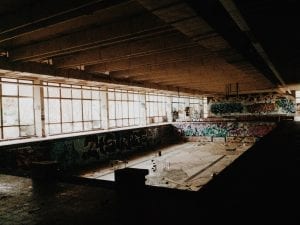
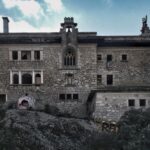
The Schwimmhalle Pankow sits on Wolfshagener Straße 91–93 in the northern Berlin district of Pankow, directly adjacent to the still-functioning outdoor Sommerbad Pankow. From the outside, it reads as an unremarkable piece of late-GDR prefabricated construction — grey concrete, rectangular, vegetation pushing through the fencing. Inside, the spatial logic of a public swim hall is entirely intact: the twenty-five-metre main pool, the shallower children’s pool, the changing rooms, the basement sauna. Everything is there except the water and the people. Since 2013, when an arson attack accelerated its deterioration, much of the glazing is gone, and graffiti covers the walls; before that, the building had been decaying more quietly for over a decade, accumulating the marks of people who came after the swimmers left.

Lonely pool

Historical Context

A Prototype for East Berlin

The Schwimmhalle was constructed in 1971 and opened in 1975 as part of the Freibad Pankow complex, providing a year-round indoor facility to complement the existing open-air summer pool. Its architect, Gunther Derdau, conceived it not merely as a local amenity but as a prototype: the German Democratic Republic intended the design to serve as a model for a network of similar swim halls across East Berlin. At the time of its opening, it was promoted as the most modern and largest indoor pool in East Berlin, equipped with a water filtration system and energy-saving infrastructure that were, by the standards of the mid-1970s GDR, technically advanced. The main pool measured 25 metres in length; alongside it was a 12 × 8.5-metre non-swimmer pool for children and beginners; in the basement, a sauna completed the programme. For residents of the Pankow district — at that time a particularly significant area of East Berlin, as it housed many senior SED functionaries in the villas along Majakowski-Ring — the Schwimmhalle was a neighbourhood institution.

J1BgcR2KvTc
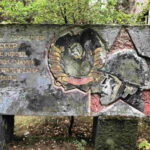
Some historical photos of the pool

After Reunification

Following the German reunification of 1990, the pool’s fortunes deteriorated progressively. The structural costs of maintaining a building of this type, combined with declining visitor numbers, made it increasingly unviable under the post-reunification municipal funding model. In 1996, with the establishment of the Berliner Bäder-Betriebe — the publicly-owned company placed in charge of all Berlin’s swimming facilities — the Schwimmhalle passed into their management. According to the Förderverein Schwimmhalle Pankow, the civic association that subsequently campaigned for its reopening, only one million deutschmarks would have been needed at that point to carry out the necessary repairs. The money was not found. The hall was closed in 2000 due to structural deterioration and the absence of renovation funds, having operated for roughly twenty-five years.

What We Found

The Empty Basin

The pool has its own atmosphere. It would be great to come here with friends and drink some beer inside, though I came alone, and it was also cool. On the ground floor, there are two swimming pools: one for kids, another for adults, with a water depth of 1.80 m. In the basement, there is a modest sauna.

After the Arson

In 2013, the swimming pool came under an arson attack, which is why many windows and panes of glass are broken. The building itself is now in really bad condition.

Current Status

The Schwimmhalle Pankow still stands, still derelict. Over two decades of debate, feasibility studies, and planning procedures have produced no reconstruction and no demolition. A 2018 feasibility study by the Pankow district authority recommended demolishing the ruin and replacing it with a new multifunctional bath complex, alongside a new primary school and an expanded outdoor playground. The projected cost reached 42 million euros, later revised upward. The process stalled repeatedly over environmental protection requirements, traffic studies, noise assessments and contaminated-ground investigations from the former pool’s chemical use — formalin, radioactive tracer substances, and industrial cleaning agents. In March 2025, the supervisory board of the Berliner Bäder-Betriebe formally revoked the resolution approving the multifunctional bath project, citing the Berlin Senate’s budget constraints. In its place, a simpler functional swim hall — without sauna facilities or leisure attractions — is now planned on the same site, with completion expected no earlier than the end of 2029, conditional on a completed land-use plan by the end of 2025. The Pankow district assembly voted on 29 January 2025 to maintain the more ambitious multifunctional bath plans, putting the district in open conflict with the Senate’s revised programme. As of the time of writing, 2026, the ruin of the Schwimmhalle remains on the plot. No demolition has begun. The adjacent Sommerbad Pankow continues to operate as a seasonal outdoor pool.

Urbex location:

2 thoughts on “Stolen swim

Leave a Reply