

Take a trip to the ancient city of Hue, Vietnam, exploring the remains of the vast abandoned water park of Ho Thuy Tien.
Abandoned water park, Hue, Vietnam
On the southern outskirts of Huế, hidden between pine forest, artificial lakes and the humid subtropical landscape of central Vietnam, lies one of the most internationally recognised abandoned leisure complexes in Southeast Asia: the former Ho Thuy Tien Water Park. For years, the site has circulated widely through photography forums, urban exploration communities and travel media, often reduced to the image of a monumental dragon structure emerging above an empty lake. Yet behind that iconic image stands a far more revealing story about speculative tourism development, failed infrastructure planning and the uncertain afterlife of unfinished recreational architecture in rapidly transforming contemporary Vietnam.
When I arrived that morning, still half asleep after crossing the city at dawn, the place felt strangely disconnected from the popularity it had acquired online. At 6 a.m., after a quick breakfast, I was already standing near the entrance road leading toward what would become one of the most memorable abandoned places I had visited in Southeast Asia.
A quick look at maps.me immediately revealed two possible routes. There was the official entrance where visitors were reportedly charged a fee, and another path, apparently used by locals, that entered the park from the opposite side without formal control. Naturally, I chose the second option.
Historical Context
The abandoned complex known today as Ho Thuy Tien Water Park was developed during a period of accelerated tourism expansion in Vietnam following the economic reforms introduced through Đổi Mới, the economic liberalisation process initiated in 1986 that progressively transformed the country’s centrally planned economy.
Construction of the park began in the early 2000s under the supervision of the Hue Ancient Capital Landscape Company, a local state-affiliated enterprise responsible for tourism development projects in the region.
The complex officially opened in 2004, reportedly requiring an investment of approximately 70 billion Vietnamese đồng, roughly equivalent at the time to 3 million US dollars. The project aimed to create a large-scale family-oriented recreational destination capable of attracting both domestic tourism and increasing numbers of international visitors arriving in central Vietnam.
Unlike conventional amusement parks, Ho Thuy Tien was conceived as a mixed recreational complex. Initial plans included swimming pools, water slides, performance areas, animal exhibitions, an aquarium housed inside a monumental dragon sculpture, lakeside activities and landscaped public leisure spaces distributed across the entire site.
The project, however, failed almost immediately.
Reliable contemporary reporting from Vietnamese media suggests that visitor numbers remained consistently below expectations shortly after opening. The park suffered from poor management, weak infrastructure connections to the city centre and the inability to compete with the rapidly changing tourism economy developing elsewhere in Vietnam.
Within only a few years after inauguration, operations were gradually suspended, and the park effectively ceased functioning altogether.
In 2016, authorities announced plans to redevelop the abandoned complex after assigning management rights to Hue Monuments Conservation Centre. Despite occasional maintenance efforts and intermittent security presence, large sections remained abandoned for years, allowing the site to become internationally known through urban exploration photography.
What makes Ho Thuy Tien particularly interesting is that, unlike many abandoned structures inherited from industrial decline or political collapse, this place represents a much newer category of ruin: the failed speculative infrastructure of post-socialist economic transition.

Architecture and Space
Architecturally, Ho Thuy Tien belongs to a distinctly early-2000s model of recreational design common across rapidly developing Southeast Asian tourism economies.
Rather than concentrating activities inside a single coherent structure, the complex was designed around a central artificial lake, around which multiple themed attractions were distributed.
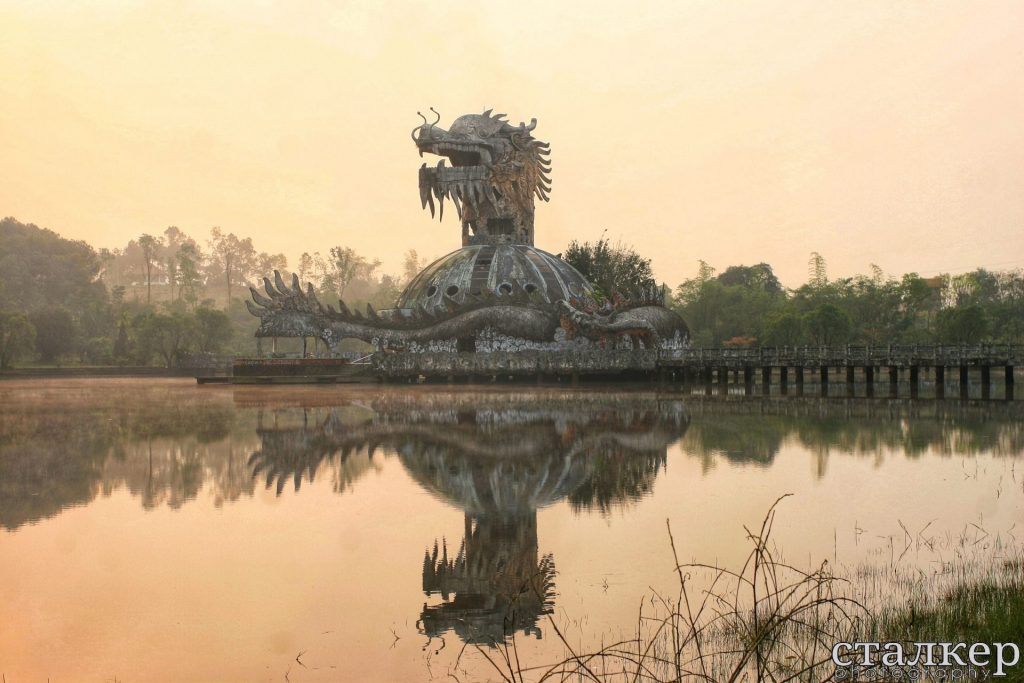
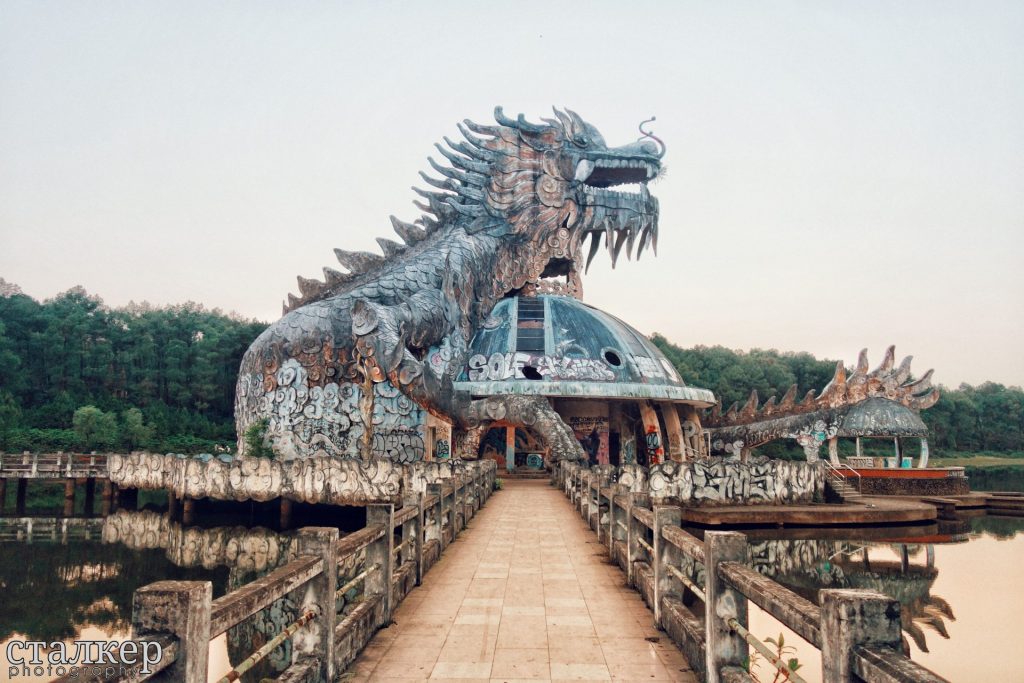
The most visually dominant structure remains the enormous dragon sculpture rising directly above the water. Constructed as both an architectural object and a functional aquarium, the dragon served as the symbolic centrepiece of the park. Visitors originally entered through its lower body and moved upward through internal staircases toward observation platforms positioned inside the dragon’s head.
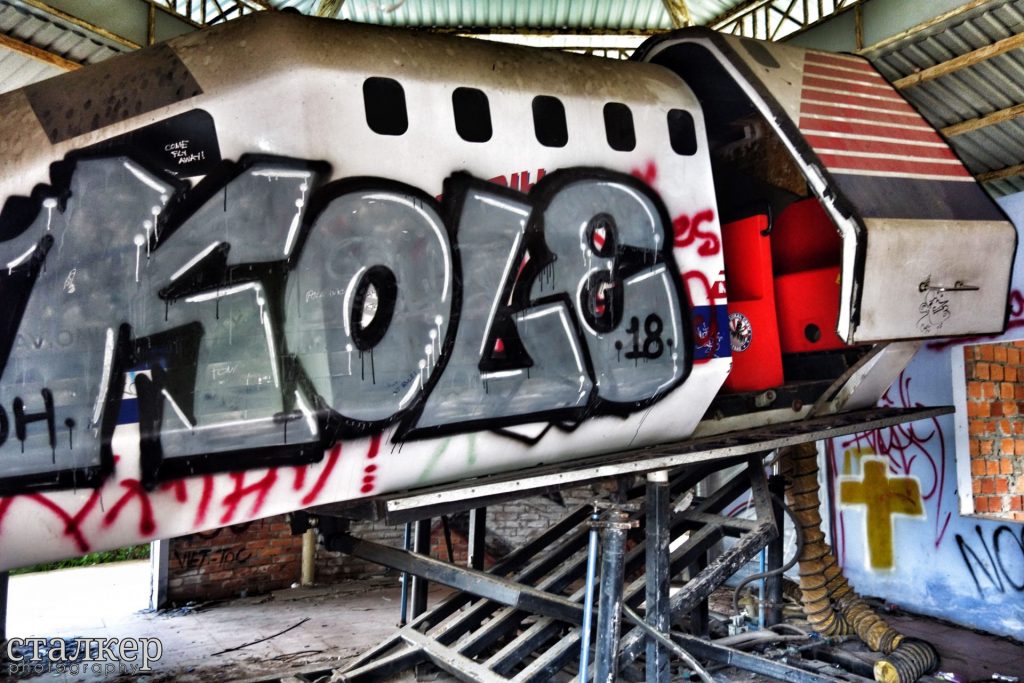
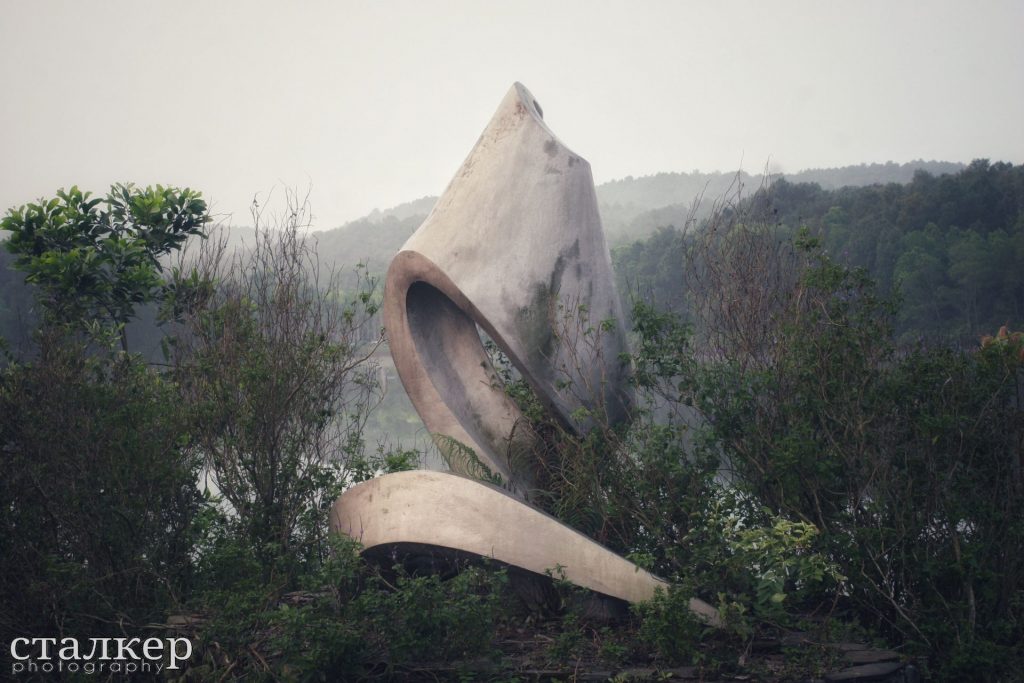
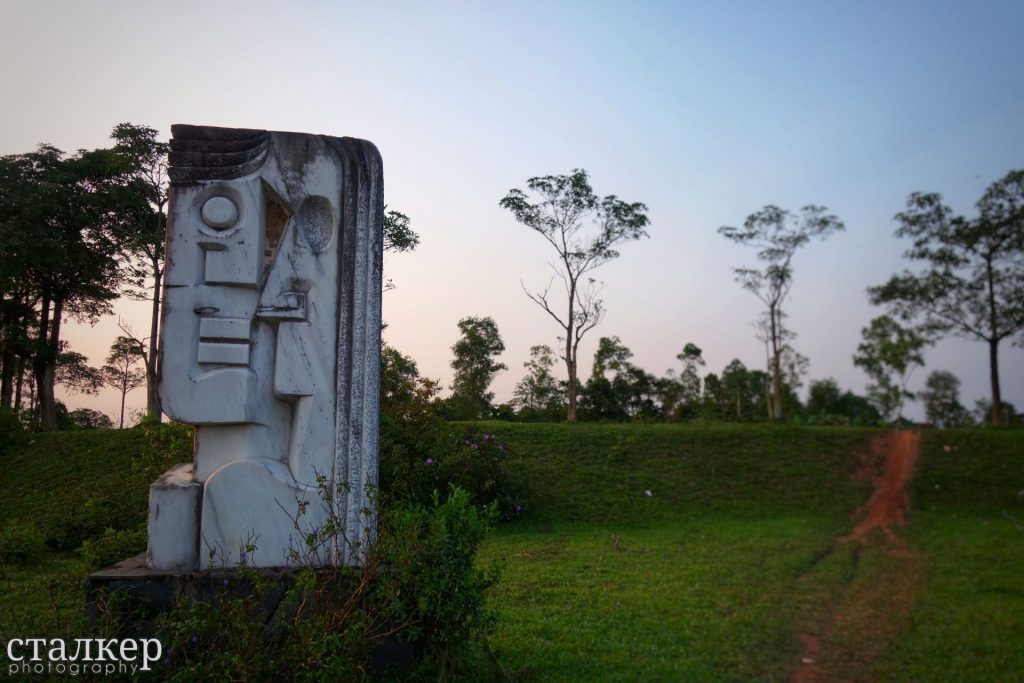
Elsewhere, the site included large open-air aquatic facilities, stadium structures apparently intended for marine animal performances, decorative sculptures, mechanical installations, pools and landscaped pedestrian areas integrated into the surrounding forest.
Unlike older abandoned Soviet institutions or industrial ruins, here, deterioration feels relatively recent. The architecture still carries traces of an interrupted future rather than a distant historical past.
Decline and Abandonment
The closure of Ho Thuy Tien appears directly linked to economic underperformance rather than structural failure.
Despite substantial initial investment, the park never succeeded in establishing itself as a sustainable tourism destination. Limited visitor traffic reportedly made long-term operation financially impossible.
After abandonment, the absence of constant maintenance accelerated deterioration. Weather exposure damaged structures, broken glass accumulated throughout public areas, vegetation slowly overtook pathways, and abandoned attractions began decaying under the tropical climate.
By the early 2010s, the site had already become one of Vietnam’s best-known abandoned places, attracting photographers, travellers and urban explorers from around the world.
Ironically, its abandonment generated far more international visibility than the park ever achieved while operational.
What We Found
The bus left me quite far from the centre of Hue, but fortunately very close to the place I had come for. That morning, Stalker was heading toward one of the most internationally recognised abandoned places in the world: Ho Thuy Tien Water Park. After a quick breakfast, I reached the area around six in the morning and immediately checked maps.me, where I noticed there were two possible entrances — the official one, where visitors usually paid a small entrance fee, and another unofficial route entering from the opposite side. Naturally, I chose the second option.
It was not a proper entrance at all, just a road already being used by locals who had started their day much earlier than me. I stopped one man nearby and asked whether I could leave my backpack inside his house while exploring the area. Without much hesitation, he understood exactly what I wanted, pointed toward the abandoned park and asked me whether I intended to visit it. “Of course,” I answered immediately, before disappearing into the vegetation and starting the exploration.
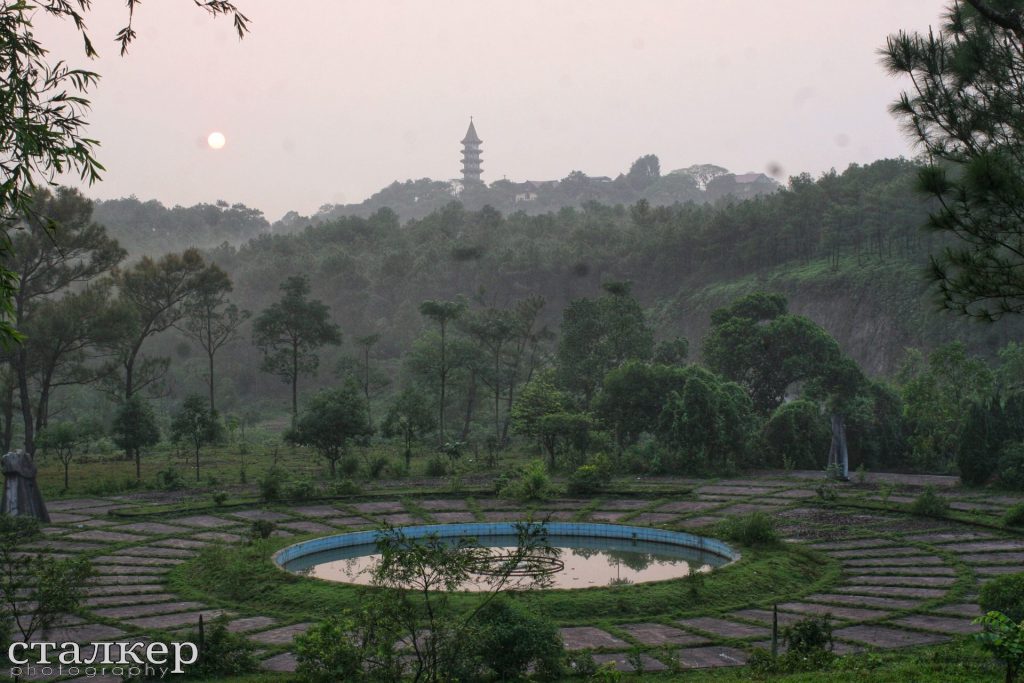
The morning atmosphere was unexpectedly peaceful. A beautiful sunrise was beginning to illuminate the lake surrounding the abandoned structures, while birds were singing somewhere inside the forest and cows could be heard in the distance. The first thing I noticed was how strangely calm everything felt. Despite the enormous scale of the abandoned complex, there was absolutely no sense of tension. Photographing the place in complete silence, I found myself simply enjoying being there.
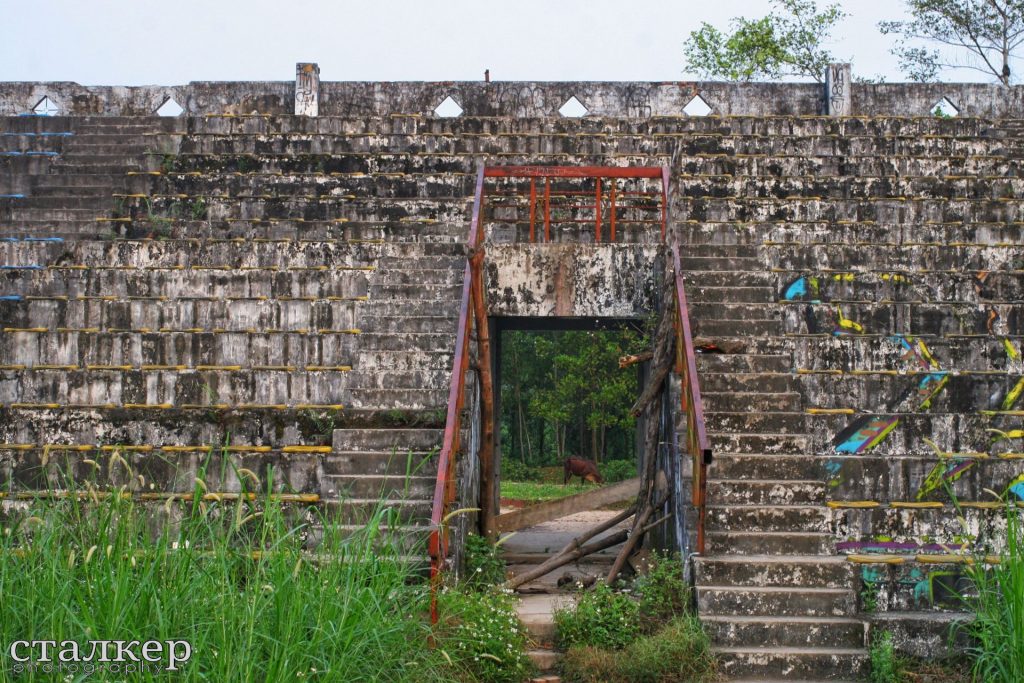
The first structure I reached was the abandoned aquatic stadium where performances involving sea animals had probably once been planned. The floor was covered almost entirely with broken glass, forcing me to move carefully. At one point, I suddenly heard voices somewhere nearby and instinctively rushed to hide without paying attention to where I was stepping, immediately cutting myself on shattered glass before realising what had happened.
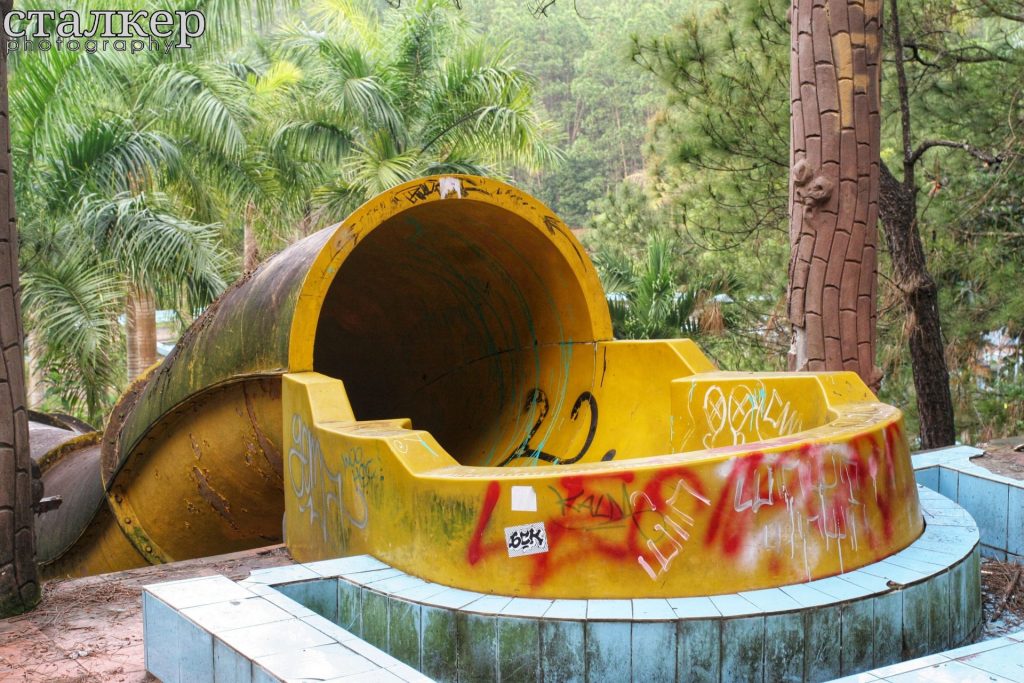
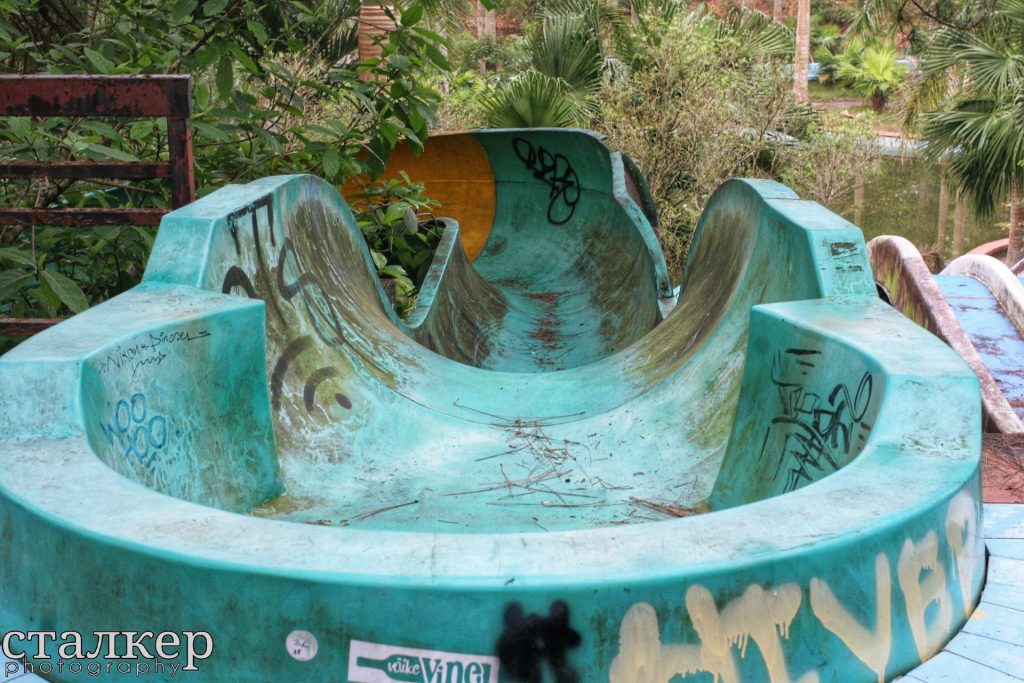
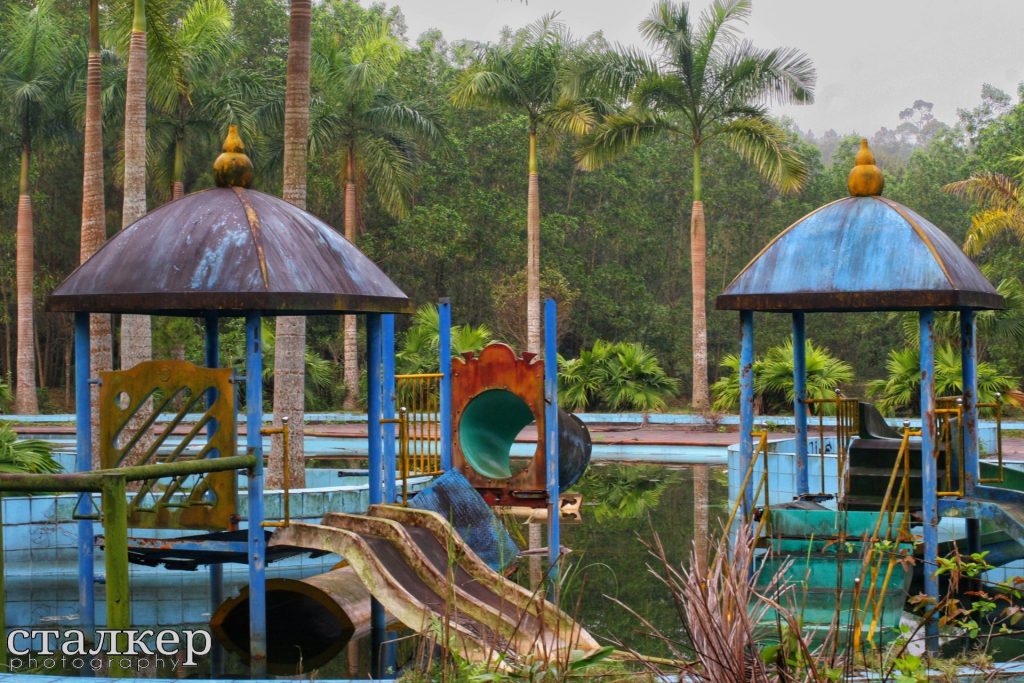
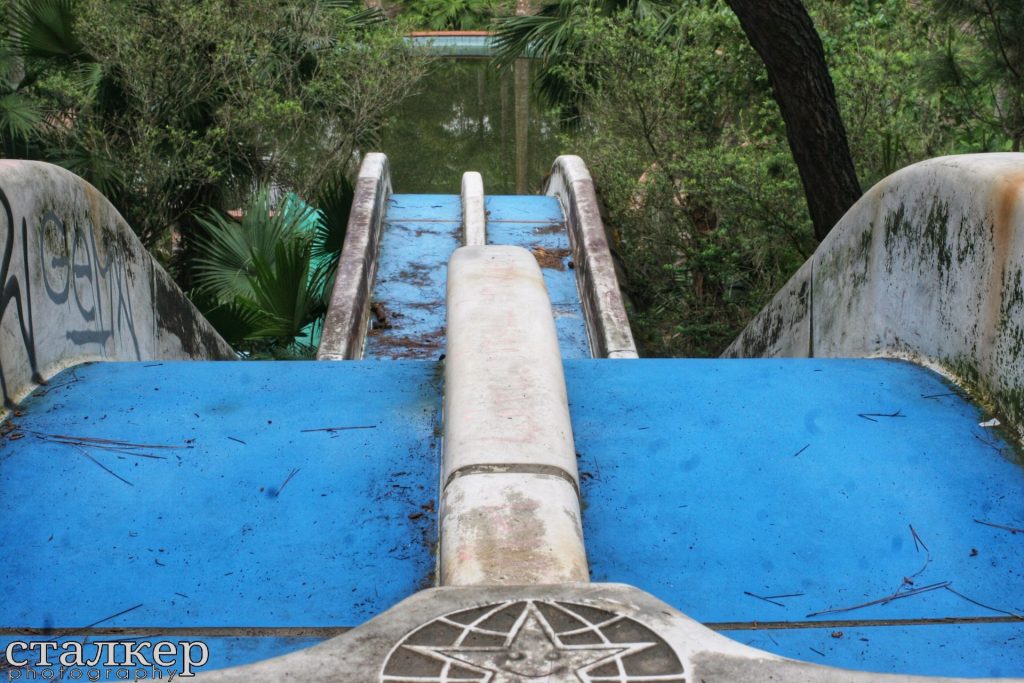
Continuing deeper into the complex, I reached what locals referred to as the crocodile pool, a large abandoned swimming area with several slides still intact. According to local stories, crocodiles had remained here for some time after the park closed before eventually being removed by authorities. A little further ahead stood the structure I had really come for — the enormous dragon rising above the lake. It was the main reason this place had become internationally famous, and despite having seen countless photographs online, seeing it in person was something completely different. Before even reaching it, I must have taken hundreds of photos from every possible angle.
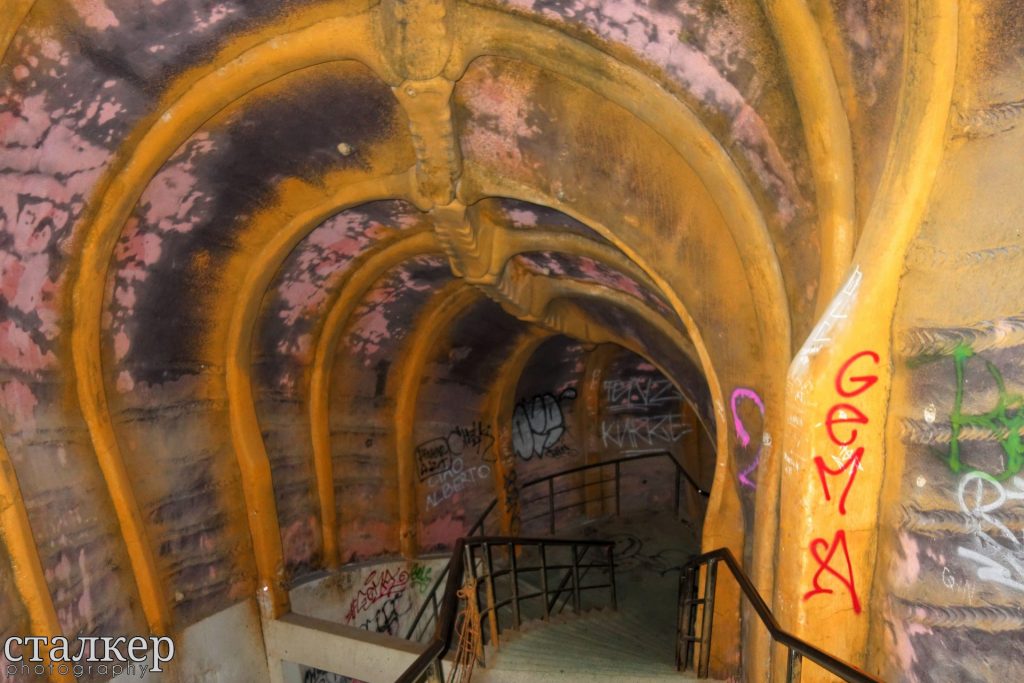
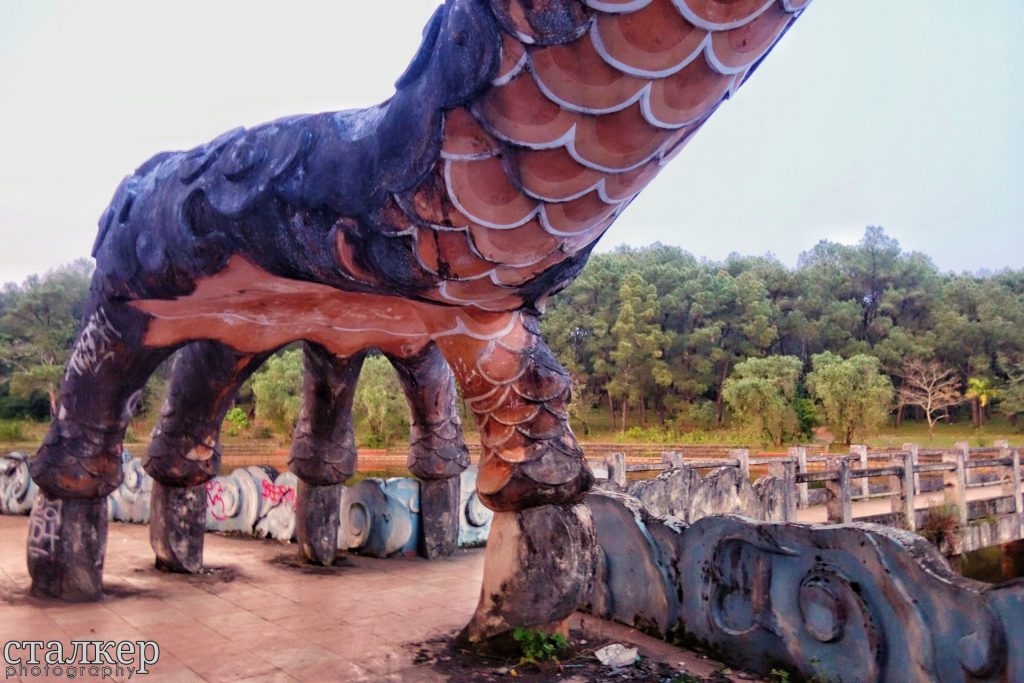
Entering the dragon itself was surreal. The structure was enormous, far larger than photographs suggested. Inside, I could observe the hollow internal body, the metal framework, the internal chambers, the teeth, and the dark enclosed spaces where the aquarium once operated. Moving carefully upward through the internal staircase, following the body from the tail toward the head, I eventually reached the highest point of the structure. From there, the entire abandoned park stretched below me in every direction. I stayed there for quite a while, taking photographs, including a few standing directly inside the dragon’s open mouth, genuinely happy to finally visit a place I had wanted to see for a long time.
Later in the evening, we returned a second time, but the atmosphere had changed completely. Sunset had transformed the landscape, and what had felt isolated and peaceful that morning now felt strangely crowded. Groups of European tourists were arriving on rented motorbikes, cameras everywhere, people moving through the ruins simply searching for unusual photographs. We stopped one and asked why he had come here, wondering if he was interested in abandoned places as well. His answer was immediate: “You can make beautiful photos here. It’s so creepy.”
We smiled quietly to ourselves and kept walking. Shortly afterwards, we encountered a guardian who informed us that the park would close in twenty minutes, although he never asked for money. We laughed at the absurdity of trying to close an abandoned place with no fence, but eventually he became persistent enough to force us to leave before revisiting everything we wanted one last time. Leaving the second time felt strangely disappointing. The architecture had not changed, but somehow the place had already lost part of the solitude and silence that had made the first exploration feel so unforgettable.
Current Status
As of 2026, Ho Thuy Tien Water Park remains partially abandoned, though its condition has evolved considerably over the last decade.
Vietnamese authorities initiated redevelopment discussions beginning in 2016, and certain areas have periodically seen maintenance and restricted access measures. However, large sections of the original park — including the iconic dragon aquarium — continue to survive in a state of semi-abandonment.
Today, the site exists in an uncertain transitional state: neither fully operational nor entirely abandoned.
Its international reputation as one of the world’s most photographed modern ruins continues to attract visitors, even as authorities periodically attempt to regulate access and redefine its future within Hue’s expanding tourism economy.

Urbex location: