

Somewhere in faraway Iceland, by the sea, an old plane has found its resting place. It has been lying there for 40 years, and only the seagulls and the waves know its innermost secrets.
Historical Context
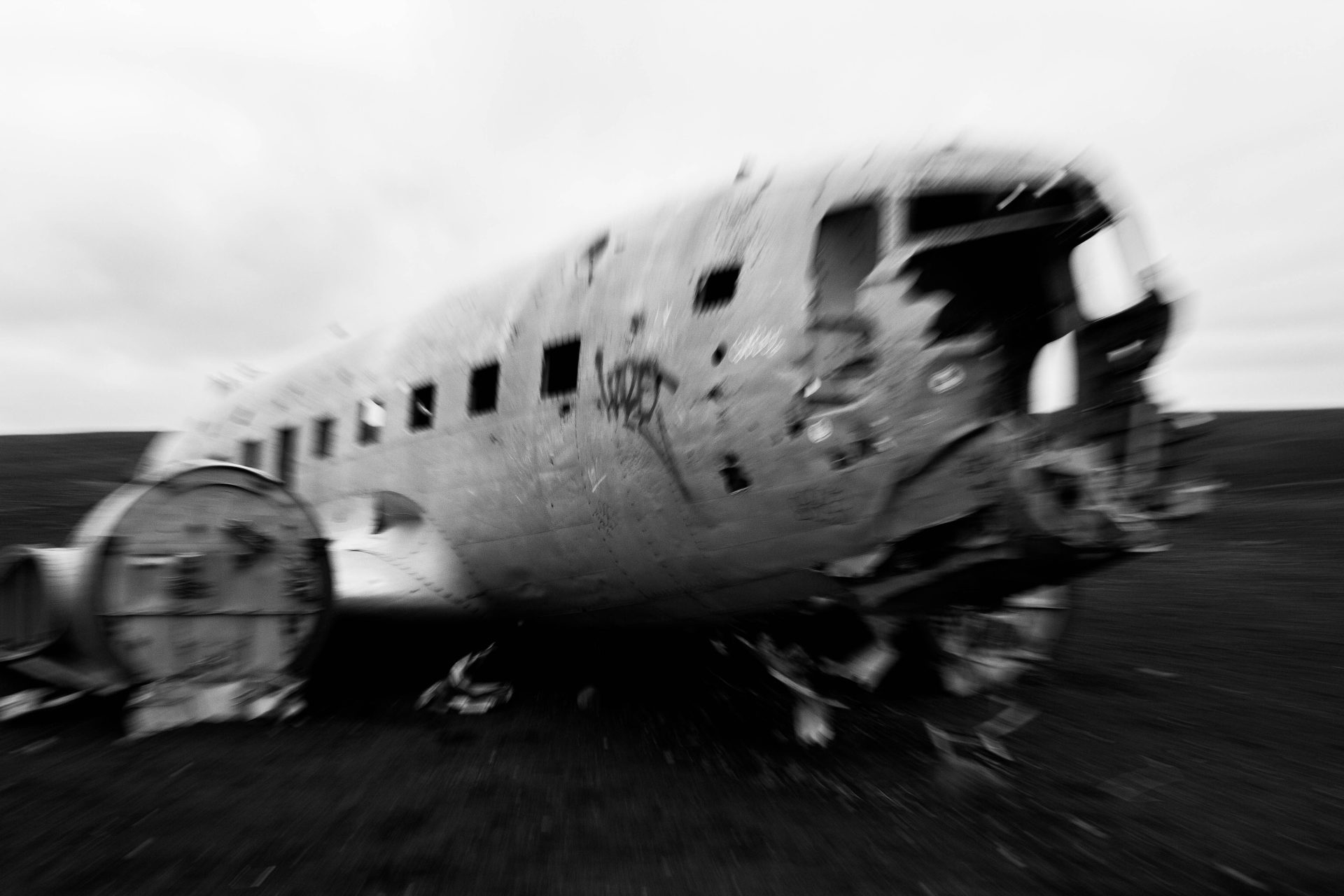
On the afternoon of 21 November 1973 — official US records list the date as the 24th, but Icelandic press accounts and eyewitnesses place it on the 21st — a Douglas C-117D transport aircraft operated by the United States Navy crashed onto the Sólheimasandur sandy beachline. The aircraft, often mislabelled a simple DC-3, was in fact one of around a hundred Douglas Dakotas the US Navy and Marine Corps had modernised into the so-called Super DC-3 configuration, with new outer wing panels, a lengthened fuselage and more powerful engines, redesignated C-117D under the tri-service designation system introduced in 1962. This particular airframe carried serial number 17171 and had been converted from an earlier R4D-5 in 1951.
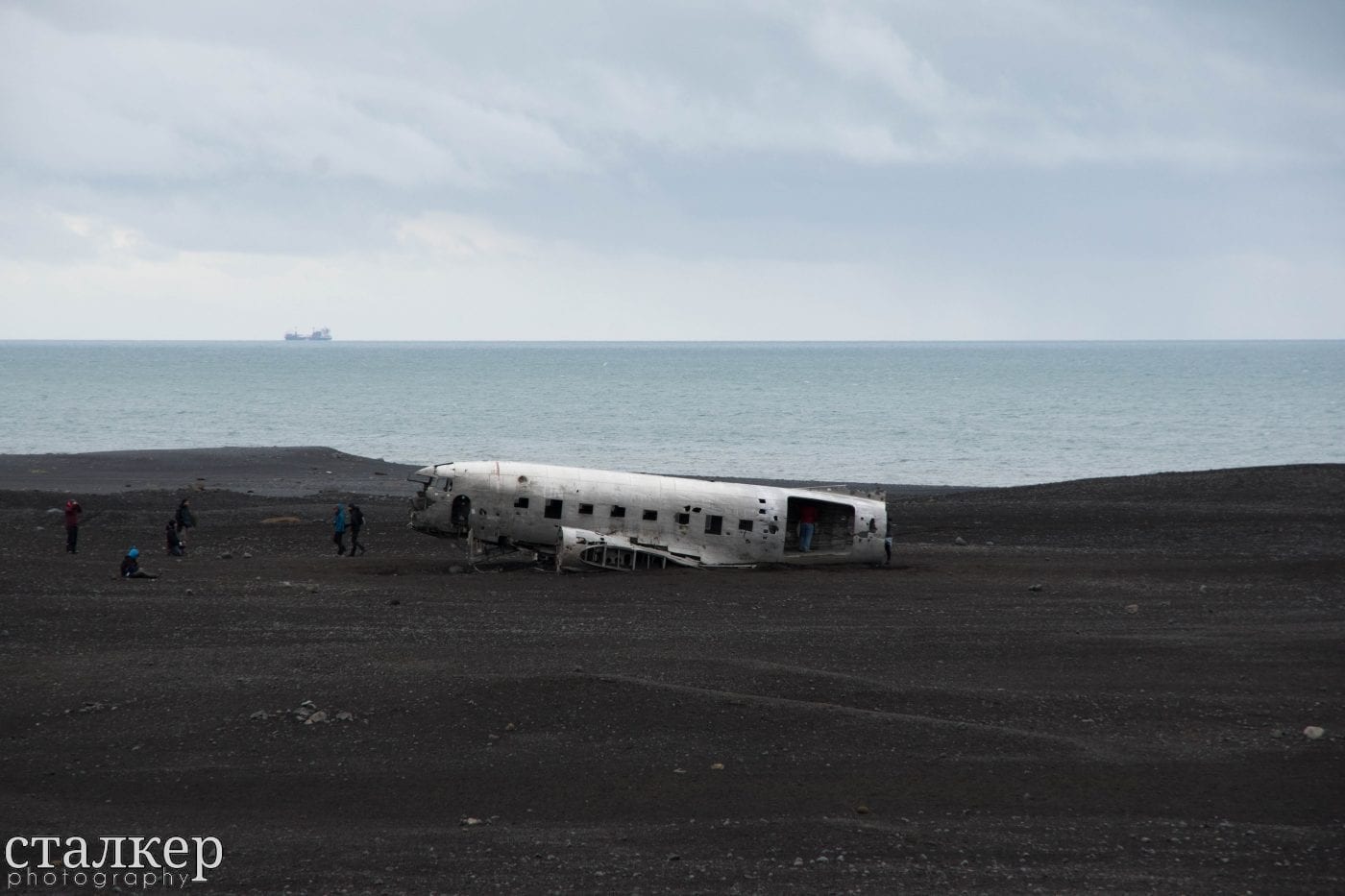
The flight that day was a routine logistics run, travelling from Höfn Hornafjörður Airport to Naval Air Station Keflavík after delivering supplies to the radar station at Stokksnes — part of the wider American military presence in Iceland during the Cold War. According to a 2025 interview with surviving crew member Gregory Fletcher, ice began forming on the aircraft about 45 minutes after takeoff, eventually blocking the carburettor’s air-fuel mixture and causing both engines to fail. With no GPS and limited visibility, Fletcher judged that the crew’s chances were better attempting a landing on the coast than on the inland glacier or surrounding mountains, and the pilot turned the aircraft south toward the shoreline. The plane came down on the frozen beach, stopping only a few metres from the waterline. Accounts differ on the exact number of people aboard — sources cite both five and seven — but all crew members survived without serious injury and were rescued by helicopter within the hour.
Decline and Abandonment
The US Navy formally wrote off the aircraft — “surveyed,” in Navy parlance — and left the unsalvaged remains at the crash site. The decision was largely practical: in 1973, the beach lay roughly 3.5 kilometres from the nearest road, which at the time was not yet part of Iceland’s Ring Road and had not yet been connected by bridge across the Skeiðará river. Recovering a stripped, damaged transport plane from a remote glacial sandur was judged not worth the effort, and after removing anything of operational value, the Navy abandoned the hull where it had stopped.
In the decades that followed, the wreck passed into informal local use. For years, it served as makeshift storage for the farmer on whose land it had landed, and it was reportedly used as target practice by local hunters, leaving it pocked with bullet holes that are still visible today. Its wings and most of its tail section disappeared at some point after the crash; according to local accounts, a farmer removed and sold the missing pieces, though this detail remains unverified and is retained here only as oral history rather than fact.

Current Status
As of 2024, the fuselage of the C-117D remains relatively intact, and the site continues to function as a popular, unofficial tourist destination, despite having no formal heritage protection or on-site management. Superficial damage from graffiti, gunfire and the sheer volume of visitors has accumulated over the years, and the walk to and from the wreck — about two to three hours round trip across exposed, weather-beaten terrain — has proven genuinely hazardous: in January 2020, two tourists died of hypothermia near the wreckage after being caught in a storm, and rescue teams have since had to retrieve other visitors who ignored weather warnings. The site’s visibility has been amplified by its repeated appearances in music videos and television productions over the past decade, which has only increased foot traffic to a beach that was, until 1973, essentially uninhabited. Because Sólheimasandur is an active glacial outwash plain, the wreck’s long-term survival is not guaranteed: future flooding from volcanic activity beneath the Mýrdalsjökull glacier could, at some point, remove it from the landscape altogether.


What We Found
Today, the wreck is one of the most visited sites in the country, an urbex location or not — when we arrived, it was difficult to get a single frame without a tourist somewhere in it. The fuselage itself is in surprisingly good condition: the cabin shell is largely intact, and on the ground around it, we noticed what looked like the engine housings from the wings, half-buried in the sand. Up close, the plane felt smaller than we had pictured it — after a full day spent reaching the site, on foot, across flat black sand with nothing else around, that was a strange thing to feel a little disappointed by. Fifty years on, the gulls overhead and the tide a few metres away are still the only constant company this fuselage has.

Urbex location:


